Lawn care company reviews are mostly about service and staff
I analyzed all the Google reviews for a regional lawn care service in Austin, Texas. Online reviews are extremely important for customer acquisition, especially in local service industries. Only a handful of reviews mention technical terms like fertilize or seed. Five-star reviews are primarily about customer service, clear communication, or professional staff. Turfgrass management expertise definitely creates good results, but it’s the service experience that drives positive reviews.
Google reviews distribution
I scraped all the Google reviews for this location with Apify. This lawn care business has about 1,100 reviews total, and 820 of them included text beyond just a star rating.
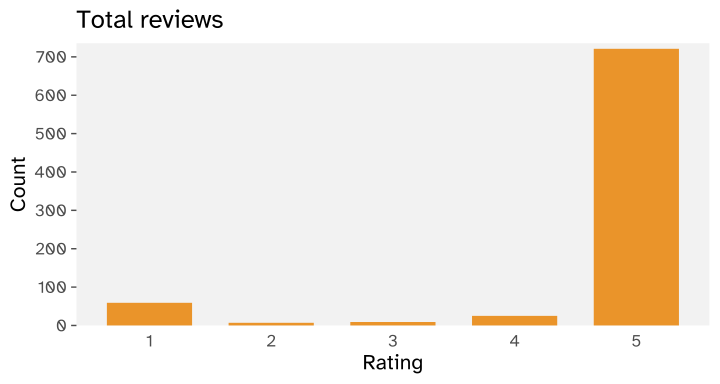
The figure above shows the review distribution by star rating. This bimodal distribution is a well-documented phenomenon in reviews or customer feedback. There are a lot of 5-star reviews and a lot of 1-star reviews. Customers are motivated to leave feedback when they have either exceptionally positive or negative experiences. We should try to understand what motivates customers to leave positive reviews, and amplify that. Negative reviews can tell us customer pain points or problems.
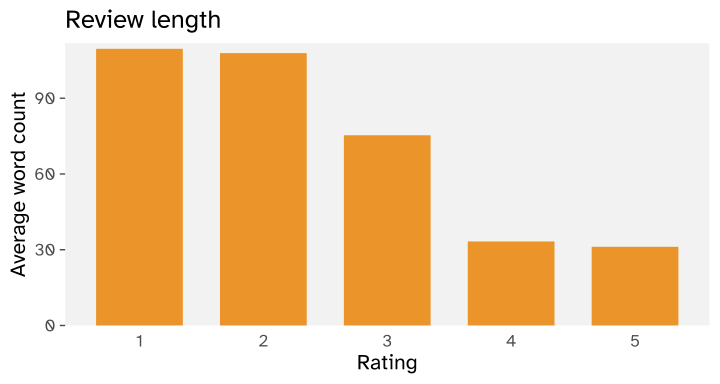
The reviews range from a few words to a few sentences. The 5-star reviews are often short and positive, while the 1-star reviews are longer and more detailed. The detailed nature of 1- and 2-star reviews provides more specific, actionable feedback. I’ve normalized for the length differences in the keyword frequency analysis.
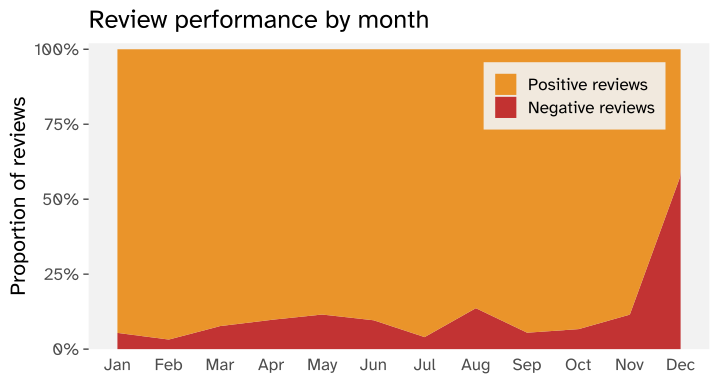
This figure above shows the seasonal pattern of reviews throughout the year. There are relatively more positive reviews in January, February, and July. This is surprising because I expect Austin lawns look worse at these times of the year. Lawns are dormant in January and February, and may have winter annual weeds. July is hot and turf growth potential is high, but that also brings heat and drought stress. This disconnect between lawn appearance and review sentiment suggests that visual turf condition doesn’t necessarily shape review ratings. December stands out with half of its reviews being negative (although there are fewer reviews overall this month). Something is going on in December that leads to more negative reviews or less positive reviews.
Keywords and phrases
I used a simple term frequency method to identify distinctive words between positive reviews and negative reviews. We can already start to see what drives customer satisfaction and dissatisfaction with this lawn care company.
Positive reviews
Positive reviews have keywords like professional, friendly, knowledgeable, excellent, courteous, team, explain, great job, great service, answer question, much better, and highly recommend. These words are mostly about staff interactions and communication, as well as the quality of the service.
Negative reviews
Negative reviews have keywords like horrible, unprofessional, refund, nobody, rude, canceled, response, call back, someone come, send someone, waste money, and money not. These words seem to be about scheduling, communication breakdowns, or price perception.
Topic clusters and meaning
The keyword analysis is valuable for surface-level patterns. I followed this with advanced topic clustering from BERTopic to get a deeper understanding of what customers are saying. This algorithm groups reviews with similar meaning.
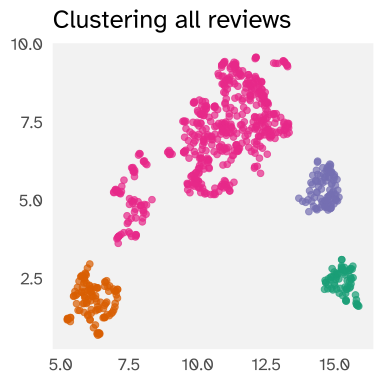
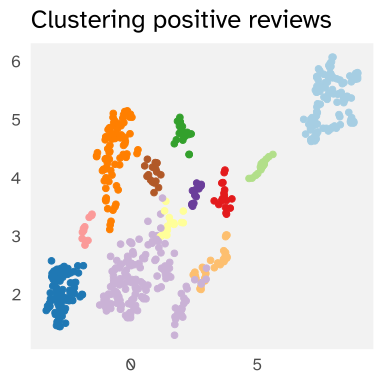
I found separating positive from negative reviews before clustering was essential. If all the reviews are together, it produces only 4 separate topics and that is not very informative. Just from reading a handful of reviews I know there are more topics than this.
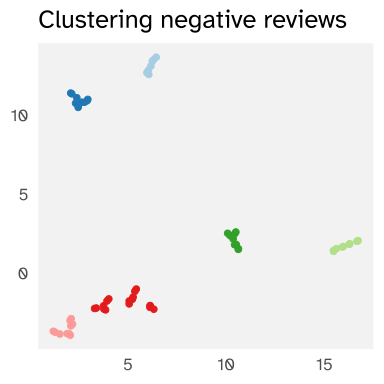
If I separate the positive and negative reviews, there are more topic clusters in each group.
Positive reviews
The positive reviews clustered into seven distinct themes, described in the table below. Professional and friendly staff dominate the discussion—about two-thirds of the reviews talk about quality interactions with team members. Visible results and clear communication are also important areas.
| Topic | Description | Count | Proportion |
|---|---|---|---|
| Professionalism | Technicians are polite, professional, and friendly | 489 | 66% |
| Good results | Better outcomes compared to previous lawn care providers | 430 | 58% |
| Communication | Explanations of treatments, answering questions and giving lawn care tips | 424 | 57% |
| Weed control | Successful elimination of weeds, greener, thicker, and healthier lawns | 327 | 44% |
| Reliable | Consistent visits and maintenance without issues | 176 | 24% |
| Long-term results | Good results and satisfaction from customers using the service for years | 60 | 8% |
| Low maintenance | Easy lawn care requiring only mowing and watering from homeowners | 62 | 8% |
Negative reviews
The negative reviews have five distinct clusters. Bad reviews are primarily about poor results or weeds, followed by missed appointments. Some reviewers describe billing issues and intrusive sales tactics. Price is mentioned but it was the least common topic.
| Topic | Description | Count | Proportion |
|---|---|---|---|
| Poor results | Treatments don’t work, weeds persist, little accountability from company | 42 | 64% |
| Missed appointments | Technicians not showing up, falsely claim they completed services | 26 | 39% |
| Billing | Charged for services they never agreed to or had already canceled | 15 | 23% |
| Sales | Intrusive door-to-door tactics, ignoring “no soliciting” signs | 14 | 21% |
| Price | Service is too expensive, misleading promises about effectiveness | 12 | 18% |
Staff superstars
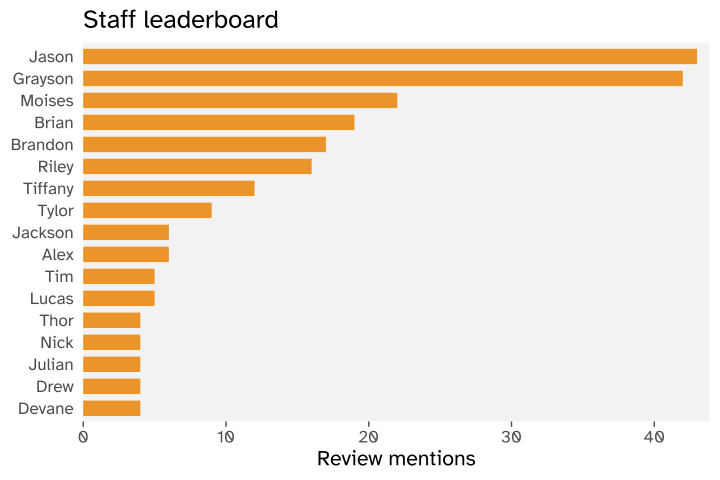
Specific team members are mentioned by name in 10% of all positive reviews. I used named entity recognition (NER) from spaCy to extract staff names, and created a staff leaderboard for these mentions. Shout out to Jason and Grayson!
What really matters
None of these reviews talk about what fertilizer was used or what seeding rate was applied. Of course those agronomic decisions are foundational for turfgrass health and good results, but the data shows customers evaluate their lawn care service on staff professionalism, communication quality, and service reliability. The company has built a strong reputation on these interpersonal factors. Continuing to invest in customer experience will yield greater returns than focusing exclusively on turfgrass science.